Handfasting.

Date:

Location:
For many modern pagans, witches, and those seeking a deeply personal alternative to a traditional wedding, handfasting offers a beautiful and meaningful way to celebrate a union. Rich in symbolism and steeped in history, handfasting is a custom that has endured for centuries, evolving from an ancient practice into a cherished ritual for couples today.
What Is Handfasting?
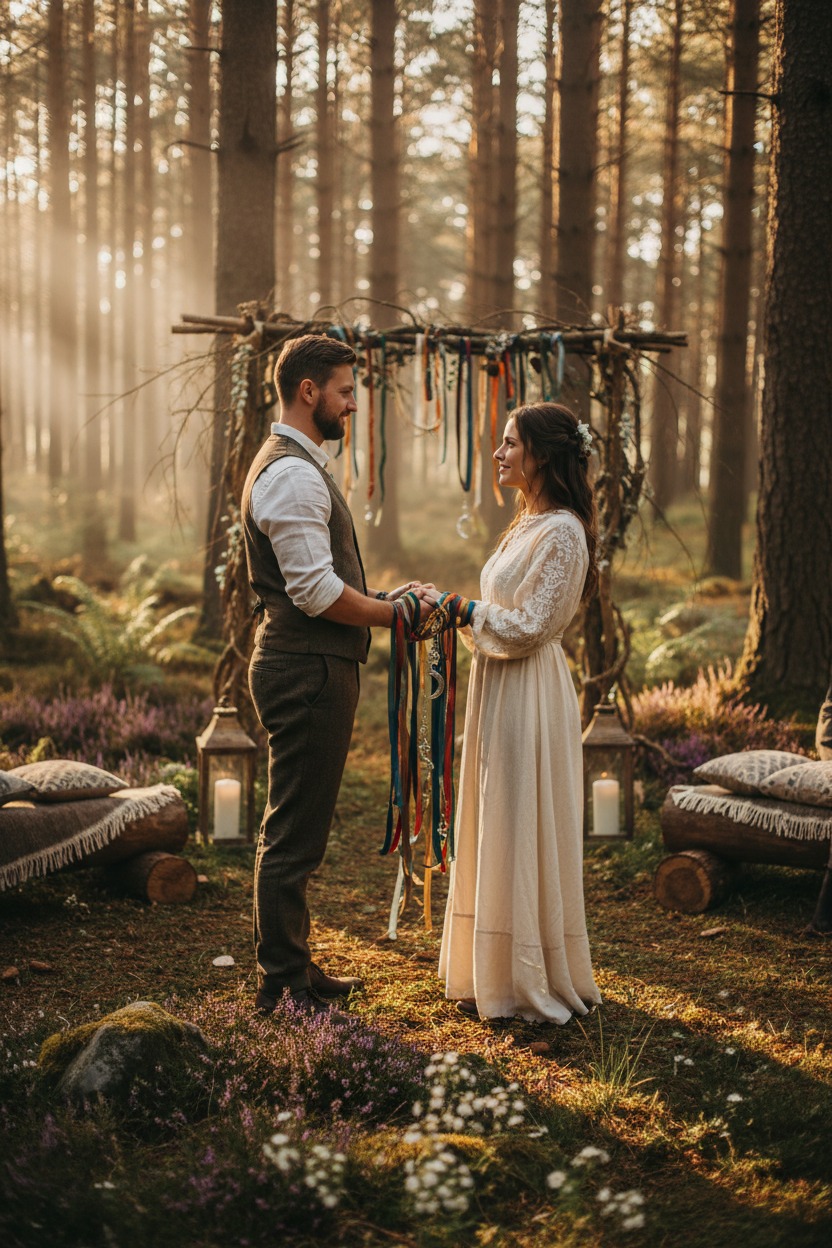
Handfasting is a ceremonial act in which a couple’s hands are bound together using ribbons, cords, or fabric while vows are exchanged. This symbolic binding represents the joining of two lives, two paths, and two hearts.
The phrase “tying the knot” is widely believed to have originated from this practice, making handfasting one of the most recognisable wedding traditions still used today.
While handfasting is often associated with modern Paganism and Wicca, the tradition predates these spiritual paths and has roots in the ancient cultures of the British Isles, particularly among Celtic peoples in Scotland, Ireland, Wales, and parts of England.
The History of Handfasting
Historically, handfasting served as a form of betrothal or marriage agreement. In medieval Scotland, a handfasting could be a recognised commitment between a couple before a formal church wedding.
Some historical accounts describe handfasting as a trial marriage lasting “a year and a day,” after which the couple could choose whether to continue the union. However, historical evidence suggests that practices varied considerably across regions and periods.
What remains constant is the symbolism of joining hands as a visible and sacred expression of commitment.
The Symbolism Behind the Cords
One of the most beautiful aspects of a handfasting ceremony is the use of cords or ribbons. These bindings can be chosen in colours that hold personal significance or magical correspondence.
Common colour meanings include:
- Red – Passion, strength, and love
- White – Purity and spiritual connection
- Green – Growth, prosperity, and nature
- Blue – Loyalty, peace, and wisdom
- Purple – Spirituality and transformation
- Gold – Success, abundance, and joy
- Silver – Intuition, moon energy, and protection
Many couples select colours that reflect their relationship, spiritual beliefs, or future aspirations together.
Handfasting in Modern Paganism
Today, handfasting has become a popular alternative wedding ceremony among Pagans, Wiccans, Druids, Heathens, and those seeking a more nature-centred celebration.
Modern ceremonies can be highly personalised and may include:
- Circle casting
- Calling the four elements
- Invoking deities or ancestors
- Exchanging rings
- Jumping the broom
- Sharing mead or wine
- Blessings from family and friends
- Seasonal or Wheel of the Year themes
Many couples choose outdoor settings such as woodlands, stone circles, gardens, beaches, or sacred groves, creating a deep connection with the natural world during their ceremony.
A Ceremony as Unique as the Couple
One of the greatest appeals of handfasting is its flexibility. Unlike many traditional wedding formats, there is no single correct way to perform a handfasting ceremony.
Some couples prefer a simple and intimate exchange of vows witnessed by close family, while others create elaborate celebrations incorporating music, ritual, and ancient symbolism.
The ceremony can be legally binding when conducted alongside the appropriate civil requirements, or it can remain purely spiritual, depending on the wishes of the couple.
Handfasting and the Wheel of the Year
Many pagan couples choose to marry on one of the eight festivals of the Wheel of the Year.
Popular choices include:
- Beltane – Traditionally associated with fertility, passion, and union.
- Litha – Celebrating the abundance and energy of midsummer.
- Lughnasadh – Honouring gratitude and shared prosperity.
- Samhain – A powerful time for ancestral blessings and spiritual connection.
Each season brings its own unique energy, allowing couples to align their union with the rhythms of nature.
Why Handfasting Continues to Inspire
In a world where weddings can sometimes feel rushed or commercialised, handfasting offers something deeply personal. The ritual focuses on intention, connection, and the conscious choice to walk life’s path together.
Whether celebrated beneath ancient trees, within a sacred circle, or surrounded by loved ones, handfasting remains a powerful reminder that love is both a commitment and a journey.
The symbolic cords may eventually be untied, but the promise they represent endures: two lives bound together through trust, respect, and mutual devotion.
Blessed be the hands that join, the hearts that unite, and the path that unfolds before them
Leave a Reply